Program Schedule
Workshop Date
September 8, 2026
Opening
Welcome and introductory remarks by the workshop chairs.
Challenges and Opportunities in Developing, Testing and Debugging Quantum Software Systems
Quantum computing has existed in the theoretical realm for several decades. Recently, it has re-emerged as a promising technology to solve problems that classical computers could take centuries to resolve. However, academics and practitioners face significant challenges and opportunities regarding software engineering practices for developing, testing, and debugging quantum programs. We discuss the components and patterns that constitute quantum software systems, the limitations of current technology caused by noise, and the lack of a standard architecture for quantum computers, among other obstacles. Regarding testing, we highlight gaps and opportunities related to transpilation, mutation analysis, input states with hybrid interfaces, program analysis, and coverage. For debugging, we examine classical techniques applied to quantum programs, quantum-specific assertions, and quantum-related bug patterns. We conclude the presentation with a list of challenges and research opportunities for the development, testing, and debugging of quantum software systems.
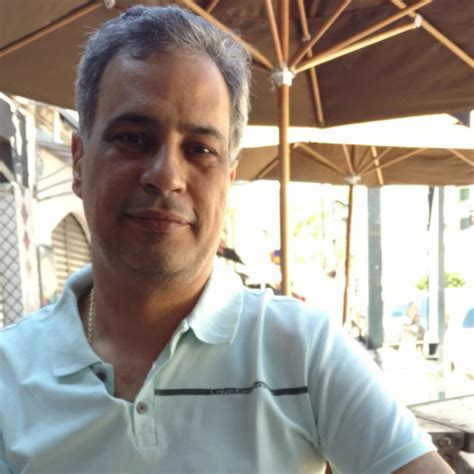
Marcos Lordello Chaim obtained BSc (1987), MSc (1991) and PhD (2001) degrees in Electrical Engineering from the State University of Campinas, Campinas, Brazil. From 1990 to 1992, he was assistant professor at São Paulo State University (UNESP), São José do Rio Preto, Brazil. After leaving UNESP, he worked at Embrapa Information Technology where he developed software for the agribusiness domain until 2005. Since then, he has been a faculty member at the School of Arts, Sciences and Humanities (EACH), University of São Paulo (USP), São Paulo, Brazil. His research interests are related to how software artifacts should be analyzed to support tasks such as testing, debugging, and maintenance. Tools based on program analysis (e.g., compiling techniques, program instrumentation) have been developed by his research group to support these tasks. Additionally, experiments to assess in practice the usefulness of testing, debugging, and maintenance techniques and tools are also among his research interests. Since 2022, he has investigated how to develop, test, and debug systems based on Quantum Computing.
A Systematic Mapping Study of Quantum Software Engineering Maturity to Guide a Brazilian Research Agenda
- Filipe Fernandes (Instituto Federal do Sudeste de Minas Gerais, Brazil)
- Claudia Werner (COPPE / UFRJ, Brazil)
- Eduardo Figueiredo (UFMG, Brazil)
Além da Ortogonalidade: Preocupações Constitutivas em Software Quântico
- Jefferson de Oliveira Silva (PUCSP, Brazil)
- Bryan Kano Ferreira (INTELI, Brazil)
- Murilo Carvalho (INTELI, Brazil)
- Fabiana Iegawa (INTELI, Brazil)
Are LLMs Reliable for Quantum Software Development? An Empirical Benchmark Study
- Filipe Fernandes (Instituto Federal do Sudeste de Minas Gerais, Brazil)
Software Engineering Tools for Quantum Computing: A Literature Review
- Camila Ferreira Alves (UFF, Brazil)
- Leonardo Gresta Paulino Murta (UFF, Brazil)
- Luis Antonio Kowada (UFF, Brazil)
Coffee Break
Networking and refreshments break.
Q&A with Authors
Interactive panel and discussion session with all the presenting authors.
Closing
Concluding remarks and planning for future editions of WQSE.